 There is new evidence that California’s accountable care organizations (ACOs) are growing in size and number, serving more patients, and improving the quality of care—according to a report released today by the Berkeley Forum for Improving California’s Healthcare Delivery System. California has more ACOs (67) than any other state in the country, with particularly rapid growth over the past two years. The report estimates that, by February 2016, more than 1.3 million Californians will be receiving their care from ACOs. The growth is projected to occur in nearly all regions of the state.
“The next few years are likely to bring continued growth and diversity in accountable care models that move increasingly toward being paid for meeting cost and quality targets,” said Stephen Shortell, lead author of the report and chair of the Berkeley Forum.
ACOs are defined as medical groups that contract with Medicare and/or commercial insurers to care for a defined population of patients and that are held accountable to meet cost and quality criteria. In a 2013 report, Berkeley Forum leaders called for at least 50 percent of Californians to be receiving care under new payment models that encourage keeping people well by 2022; and having at least 60 percent of Californians receiving their care from integrated care systems, versus only 29 percent today.
“California is fortunate to have many integrated healthcare delivery systems at various stages of development. The advancement of these systems into accountable care organizations and partnerships should be viewed as an important and very positive innovation in payment and health care delivery,” said Tom Williams, immediate past-president of the Integrated Healthcare Association and vice president of accountable care operations and strategy at Stanford Health Care.
Emerging evidence suggests that the quality of care that ACOs provide is as good, and on some measures, better than that provided by other models of care. Further, patients receiving care from medical groups with ACO contracts had consistently higher satisfaction scores than patients receiving care from groups without ACO contracts. This included measures of access to care, overall coordination of care, actions to promote health, communication with doctors, helpfulness of office staff, and overall ratings of care. While full cost-savings data are not available, preliminary evidence from an ACO contract in Sacramento found savings of $20 million, with no increase in health insurance premiums for California’s CalPERS enrollees.
The study also addressed the concern that as ACOs grow in size they may exert pressure to increase prices. “But at this point in time, our analysis indicates there is little evidence to support such concern”said Richard Scheffler, report co-author and Vice Chair of the Berkeley Forum.
Based on existing and ongoing study, the UC Berkeley School of Public Health team identified six factors associated with more successful ACOs. These include:
- Achieving sufficient size to spread costs,
- Developing new models of caring for high complex/high risk patients,
- Expanding the use of electronic health records,
- Developing effective partnerships with post-acute care providers and specialists,
- Motivating patients and families to become more engaged in their care, and
- Using standardized and transparent quality of care data for the purposes of public reporting and internal quality improvement.
The report also found that ACO location is positively associated with the number of HMOs in an area, which suggests that ACOs may be a competitive response to HMOs or that the knowledge needed to run a risk-based plan is more available in these areas. Counties with greater hospital concentration were negatively associated with having an ACO in the area and with ACO enrollment.
The report notes the need for continued technical assistance for smaller physician practices, those serving the Medi-Cal population, and those providing care in rural areas. This is particularly true in regard to electronic health record capabilities, and encouraging greater participation in quality improvement training and quality improvement collaborations.
The Berkeley Forum for Improving California’s Healthcare Delivery System is a partnership between private and public sector leaders in California to address the challenge of developing a more affordable and cost-effective healthcare system that will contribute to improved population health for all Californians. The University of California, Berkeley School of Public Health serves as a neutral facilitator for discussions and as the analytic staff for this effort.
[button link=”http://berkeleyhealthcareforum.berkeley.edu/wp-content/uploads/BerkeleyForumACOExpBrief3_feb16.pdf” color=”black”]Download Report PDF[/button]

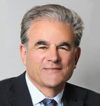
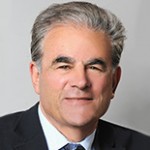 Petris Center Director Dr. Richard Scheffler was recently interviewed by Hector Rodriguez, Current Chair of the Ph.D. program in Health Policy. In the interview, Dr. Scheffler discusses his decision to found the the Health Services and Policy Analysis PhD program at the UC Berkeley School of Public Health in 1988 and serve as the founding chair of the program for its first decade, developments in the field of health policy, and the future of the program.
 The University of Chicago School of Social Service Administration issued an announcement on the release of the “Assessing Accountable Care Organizations: Cost, Quality, and Market Power” special issue of the Journal of Health Politics, Policy and Law (volume 40, issue 4). The special issue is “an in-depth look at accountable care organizations (ACOs): networks of hospitals, physicians, or other health care providers that share financial and medical responsibility for the coordinated care of a patient.” The special issue was co-edited by Colleen M. Grogan, editor of JHPPL, Professor; Co-Chair, Center for Health Administration Studies; Faculty Chair, Graduate Program in Health Administration and Policy; Editor, Journal of Health Politics, Policy and Law at the University of Chicago and by Richard M. Scheffler, Director of the Petris Center, with much of the content supported through the Nicholas C. Petris Center, with funding from the California Attorney General’s office.
 “Professor of Health Economics and Public Policy at the University of California-Berkeley (USA), Richard Scheffler, said that Spain needs to reform its health system towards an integral and coordinated system to cope with the aging of the population and in that way reduce health spending… ‘Between 1996 and 2010, despite the crisis, the health spending per capita increased at an annual rate of 3.5 percent. From 2014, the forecasting managed by the World Bank is that this growth will stabilize at 0.5 percent annually. Nevertheless, according to this institution, Spain will not be able to allocate more resources to the health budget. This is an important problem when thinking about health policy. Spain has to be more effective and efficient in their health system,’ he stressed.”


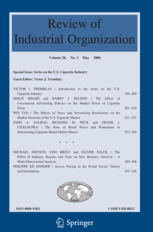 An article by Petris Center Director Richard M. Scheffler and Christopher Whaley, H. E. Frech III, Benjamin R. Handel, Liora Bowers, and Carol J. Simon was published in the Review of Industrial Organizations journal on July 15, 2015.
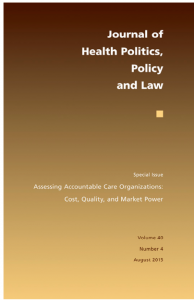 “‘Accessing Accountable Care Organizations: Cost, Quality, and Market Power,’ a special issue of the Journal of Health Politics, Policy and Law (volume 40, issue 4), is an in-depth look at accountable care organizations (ACOs): networks of hospitals, physicians or other health care providers that share financial and medical responsibility for the coordinated care of a patient.